Hulls, Sensors, and the Gray Zone: Why India's Coast Guard Is Becoming a Strategic Variable for Washington
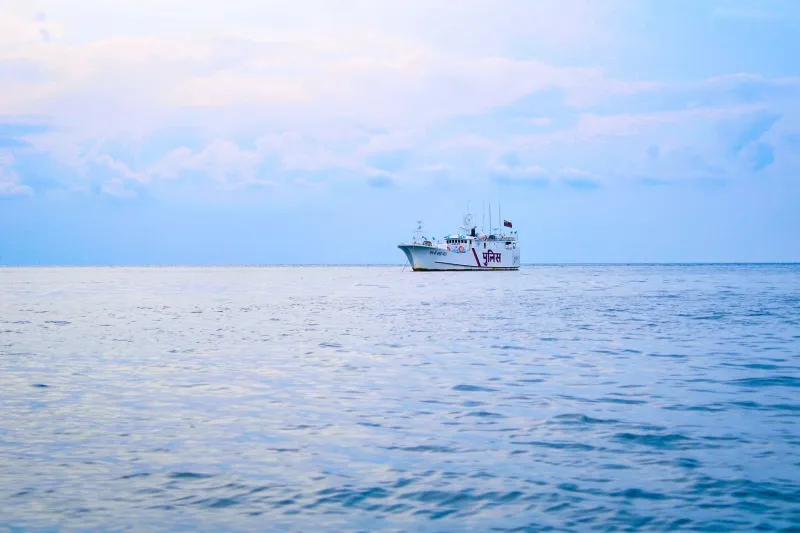
The Indian Coast Guard rarely commands the attention lavished on aircraft carriers, submarines, or ballistic missiles. Its missions are often described in the unglamorous language of search and rescue, fisheries protection, pollution response, and coastal policing. Yet by late 2026, that constabulary image is becoming strategically incomplete. India's Coast Guard is expanding its hull count, sensor coverage, and operational reach at precisely the moment when gray-zone competition in the Indian Ocean is intensifying. For Washington, the implications are larger than the service's modest profile suggests.
A Constabulary With Strategic Reach
India's coastline stretches roughly 7,500 kilometers, and its exclusive economic zone is vast. The Indian Coast Guard is the first responder across much of that space. It operates patrol vessels, interceptor boats, aircraft, and increasingly sophisticated surveillance systems. Its responsibilities overlap with the Indian Navy, but they are not identical. The Navy concentrates on warfighting and deterrence. The Coast Guard concentrates on presence, law enforcement, and maritime domain awareness.
That division of labor matters. In a contested environment, the first vessel to respond to an unfamiliar trawler, a survey ship, or an encroaching paramilitary craft is often not a warship. It is a coast guard cutter. The choice of instrument shapes the escalation calculus. A coast guard presence signals vigilance without necessarily signaling imminent combat. That is precisely the kind of signal that gray-zone competition rewards.
The Gray-Zone Test in the Indian Ocean
China's maritime pressure across the Indo-Pacific rarely arrives as a conventional naval assault. It arrives through fishing fleets, research vessels, maritime militia, port investments, and incremental claims. These tactics are designed to stay below the threshold of armed conflict while steadily altering facts on the water. The Indian Ocean is not the South China Sea, but the same logic is visible in the approaches to the Malacca Strait, in the Bay of Bengal, and around island states that sit astride sea lanes.
India's Coast Guard is well suited to this contest. Its vessels can shadow, monitor, board, and document. They can work with neighboring coast guards, conduct joint patrols, and build the habits of maritime cooperation that formal alliances often struggle to produce. They can also absorb the routine burden of presence, freeing larger naval assets for higher-end contingencies. In a region where escalation management is a daily practice, that is not a minor contribution.
A Force Multiplier for Washington
The United States has its own coast guard with a global reach, and it has long used maritime law enforcement as an instrument of statecraft. The U.S. Coast Guard's cooperation with partners in the Indo-Pacific is a quiet but important part of American strategy. India's expansion creates an opportunity to deepen that cooperation without requiring New Delhi to sign onto a formal alliance or accept a subordinate role.
The practical agenda is already visible. Joint exercises, port calls, information sharing, and capacity-building with smaller Indian Ocean states all offer avenues for coordination. The U.S. Navy and the Indian Navy have developed a substantial exercise portfolio. The coast guards of both countries have a complementary but less developed relationship. That gap is worth closing. For Pentagon planners, India's Coast Guard offers persistent presence at lower cost and lower political friction than additional warship deployments.
The Coordination Gap
The obstacle is not ambition but interoperability. Coast guards operate under different legal authorities, different rules of engagement, and different classification regimes. Sharing maritime domain awareness in real time requires secure communications, common data standards, and trust. India's commitment to strategic autonomy means that any cooperation must be framed as a partnership of equals, not as a command arrangement.
There is also the question of capacity. India's Coast Guard is growing, but it must cover an enormous area with finite assets. Maintenance, crew training, and sensor integration all compete for resources. The service's expansion is real, but it is not unlimited. Washington should avoid treating India's Coast Guard as a substitute for its own presence or as a proxy force. It is better understood as a partner that can do more in its own neighborhood if given the right tools and the right incentives.
What to Watch
The indicators to track are concrete. New patrol vessels and aviation assets will matter, but so will the service's ability to integrate unmanned systems, satellite feeds, and coastal surveillance networks. India's coordination with Sri Lanka, Maldives, Bangladesh, Seychelles, and Mauritius will reveal whether the Coast Guard's reach is matched by regional political buy-in. The degree to which New Delhi links coast guard cooperation to broader Quad or Indo-Pacific frameworks will also shape what Washington can realistically expect.
The thin blue line at sea is not a slogan. It is a description of how maritime order is actually maintained. India's Coast Guard is becoming a more capable guardian of that order. For the United States, the strategic question is whether to treat that development as an afterthought or as a quiet force multiplier in the competition that will define the Indian Ocean's next decade.