The Intellectual Vanguard: How India's Defense Think Tanks Are Quietly Rewriting Pentagon Strategy for the Indo-Pacific
Washington's strategic community has long prided itself on the depth and reach of its own policy infrastructure. From the RAND Corporation to the Center for Strategic and International Studies, American defense intellectuals have historically set the terms of global security discourse. Yet a subtle but significant shift is underway. Increasingly, Pentagon planners and National Security Council staffers are turning to an unlikely source for analytical frameworks on Asia: the defense research institutions clustered around New Delhi.
This is not a development that announces itself loudly. It unfolds through academic exchanges, joint seminars, co-authored white papers, and the quiet circulation of Indian strategic assessments through Washington's policy networks. But its cumulative effect on American military doctrine — particularly regarding the Indo-Pacific — is becoming impossible to ignore.
The Architecture of Influence
India's defense intellectual ecosystem is more extensive than most American observers appreciate. Institutions such as the Manohar Parrikar Institute for Defence Studies and Analyses (MP-IDSA), the Centre for Land Warfare Studies (CLAWS), the United Service Institution of India (USI), and the National Maritime Foundation (NMF) collectively represent decades of specialized strategic thinking about South Asia, the Indian Ocean Region, and the broader Indo-Pacific theater.
What distinguishes these institutions is not merely their geographic proximity to the challenges they study — though that proximity is itself a significant analytical advantage — but the depth of their operational and doctrinal expertise. Indian defense researchers bring firsthand knowledge of the Himalayan border environment, the dynamics of the Indian Ocean littoral, and the specific behavioral patterns of both China and Pakistan that American analysts, however skilled, can only approximate from a distance.
Over the past decade, these institutions have cultivated systematic engagement with their American counterparts. The MP-IDSA, for instance, has developed formal research partnerships with think tanks including the Stimson Center, the Carnegie Endowment for International Peace, and the Hudson Institute. These partnerships have produced joint publications and policy dialogues that feed directly into the briefing cycles of senior defense officials on both sides.
From Dialogue to Doctrine
The translation of Indian strategic thinking into American military doctrine occurs through several distinct pathways. The most direct involves the Track 1.5 and Track 2 dialogue formats that have proliferated since the signing of the foundational defense agreements between the two countries — LEMOA, COMCASA, and BECA — between 2016 and 2020. These forums bring together serving military officers, retired generals, and civilian defense researchers in settings deliberately designed to allow candid exchanges that formal diplomatic channels cannot accommodate.
In these settings, Indian analysts have consistently offered perspectives on Chinese military behavior — particularly regarding gray-zone operations, dual-use infrastructure development, and salami-slicing territorial tactics — that have materially influenced how American planners frame the China challenge. The Indian military's direct experience confronting Chinese forces along the Line of Actual Control, most dramatically during the 2020 Galwan Valley clash, gave New Delhi's strategic community an empirical grounding that Washington found invaluable.
American defense officials have been candid, at least in private, about the degree to which Indian assessments have informed their own. The specific contours of Chinese behavior in contested terrain, the logistics vulnerabilities that can be exploited along extended supply lines in high-altitude environments, and the psychological dimensions of coercive signaling — these are areas where Indian analysts have provided frameworks that Pentagon planners have subsequently incorporated into their own threat assessments.
The Maritime Dimension
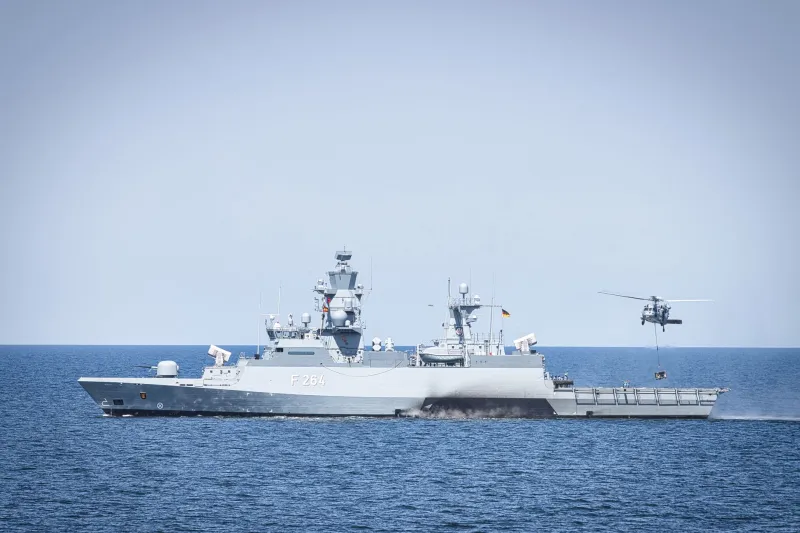
Perhaps nowhere has Indian strategic thinking proven more consequential for American planning than in the maritime domain. The National Maritime Foundation in New Delhi has developed a body of analytical work on Indian Ocean dynamics — covering everything from Chinese submarine operations to the strategic implications of port development along the ocean's littoral rim — that has become essential reading within the US Navy's planning community.
The Indo-Pacific Command's evolving approach to what it terms the "maritime gray zone" bears the clear imprint of Indian analytical frameworks. Concepts developed by Indian naval strategists regarding the management of Chinese maritime militia operations, the strategic use of island territories as forward operating positions, and the integration of coast guard and naval assets in contested waters have found their way into American operational planning documents, often without explicit attribution.
This intellectual borrowing is not one-directional. American analysts contribute significantly to joint research products, and the exchange has produced genuinely synthetic frameworks that neither country would have developed independently. But the asymmetry in regional expertise — India's strategic researchers simply know the Indian Ocean better than their American counterparts — means that New Delhi's analytical contributions carry disproportionate weight in joint intellectual products.
Institutional Gaps and Growing Pains
The relationship is not without friction. Indian strategic institutions operate within a bureaucratic culture that places significant weight on consensus-building and official sanction, which can slow the production and dissemination of analytical work. American partners accustomed to the relatively freewheeling intellectual culture of Washington's think tank community occasionally find the pace of Indian institutional engagement frustrating.
There are also substantive disagreements. Indian strategic analysts tend to be more skeptical than their American counterparts about the desirability of formal alliance commitments, more attentive to the risks of being drawn into contingencies that serve American rather than Indian interests, and more cautious about the long-term sustainability of the current Sino-American rivalry as an organizing framework for Indo-Pacific security. These differences surface in joint publications and occasionally produce genuine intellectual tension.
Yet these disagreements are themselves analytically valuable. American planners who engage seriously with Indian strategic perspectives are forced to interrogate assumptions that rarely get challenged within Washington's own policy community. The result, at its best, is a more rigorous analytical product than either country would produce in isolation.
The Stakes for American Strategy
For a US audience, the significance of this development extends well beyond the bilateral relationship. As Washington grapples with the challenge of sustaining credible deterrence across the vast geography of the Indo-Pacific — while simultaneously managing commitments in Europe and the Middle East — the analytical leverage provided by India's defense intellectual community represents a genuine strategic asset.
The Pentagon cannot afford to build the in-house expertise necessary to match the depth of regional knowledge that Indian institutions have accumulated over decades. Nor should it try. The more productive path is to deepen the institutional channels through which Indian strategic thinking flows into American planning processes — formalizing what has been an informal and somewhat ad hoc relationship, and ensuring that the intellectual contributions of New Delhi's defense community receive the recognition and resourcing they deserve.
India's strategic researchers are not American allies in the conventional sense. They serve Indian interests, apply Indian frameworks, and reach conclusions that sometimes diverge sharply from Washington's preferred narratives. That independence, paradoxically, is precisely what makes their analytical contributions so valuable to American planners seeking an honest assessment of a region that will define the trajectory of global power for the remainder of this century.
The silent sentinels of New Delhi's think tank community are, in their quiet way, helping to guard the intellectual foundations of America's most consequential strategic relationship. Washington would do well to listen more carefully.