Eyes Everywhere: How India's Intelligence Apparatus Is Quietly Tipping the Balance Against Beijing

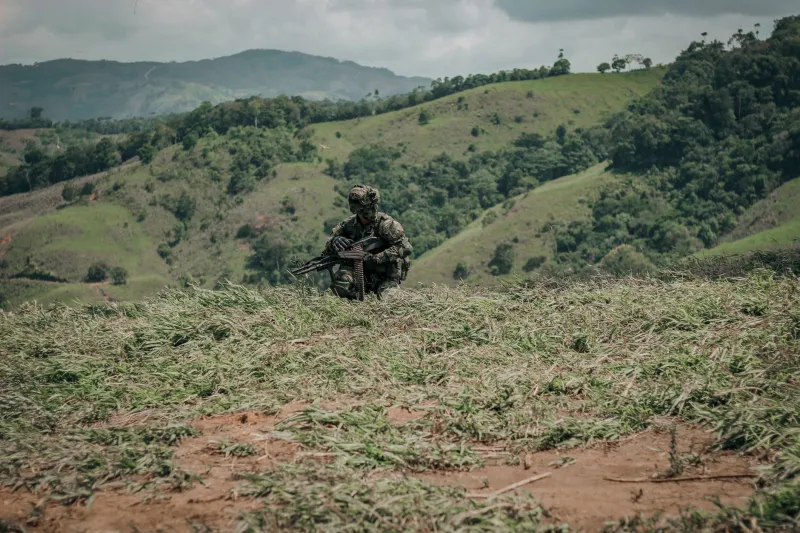
Photo by Photo by Christian Lue on Unsplash on Unsplash
In the architecture of great-power competition, the most consequential advantages are rarely the ones that make headlines. Aircraft carriers attract cameras. Hypersonic missiles generate press releases. But the intelligence officer cultivating a source inside a Chinese-funded port authority in Myanmar, or the counterintelligence analyst quietly dismantling a People's Liberation Army influence network in Kathmandu — these are the operatives whose work shapes the actual terrain of strategic rivalry. And increasingly, those operatives answer to New Delhi.
India's Research and Analysis Wing, known as RAW, was established in 1968 following the intelligence failures of the 1962 Sino-Indian War. For decades, it operated as a competent but regionally constrained service, focused primarily on Pakistan and the immediate neighborhood. That characterization no longer holds. Over the past decade, RAW has undergone a quiet but substantial transformation — expanding its geographic reach, deepening its technical capabilities, and most significantly, developing the kind of actionable human intelligence networks that American planners are finding increasingly difficult to replicate through satellites and signals intercepts alone.
The Human Intelligence Gap Washington Cannot Fill Alone
The United States intelligence community commands unparalleled technical surveillance infrastructure. The National Security Agency's signals collection capabilities, the National Geospatial-Intelligence Agency's satellite coverage, and the CIA's substantial resources are, by most measures, without peer. Yet technical intelligence has inherent limitations when adversaries operate through encrypted channels, face-to-face meetings, and deliberate communications blackouts — practices the PLA and Chinese intelligence services have adopted with growing sophistication.
Human intelligence, by contrast, requires something that cannot be manufactured through budget allocations alone: cultural proximity, linguistic fluency, and decades of relationship-building within target communities. This is precisely where India's geographic and civilizational footprint becomes a strategic asset of the first order. Indian diaspora communities stretch across Southeast Asia, East Africa, the Persian Gulf, and Central Asia. Indian merchants, academics, diplomats, and laborers have maintained commercial and cultural ties with these regions for generations — ties that intelligence services, with patience and skill, can convert into operational networks.
RAW's expansion into Southeast Asia has been particularly notable. In countries such as Myanmar, Thailand, Vietnam, and Sri Lanka, Indian intelligence officers have cultivated relationships with political elites, military officials, and commercial actors who interact directly with Chinese state-linked enterprises and PLA-affiliated entities. The intelligence flowing from these networks — on Chinese infrastructure financing terms, on port access agreements with military dimensions, on the movement of dual-use technology — is precisely the category of granular, contextual information that Washington's more technically oriented collection apparatus struggles to generate.
Counterintelligence Successes and the China Factor
Perhaps the most operationally significant dimension of India's evolving intelligence posture is its counterintelligence work against Chinese penetration operations. Beijing's intelligence services — principally the Ministry of State Security — have invested heavily in cultivating assets within South Asian governments, militaries, and academic institutions. India, sharing the world's longest disputed border with China and having fought a war against the PLA within living institutional memory, has developed a counterintelligence culture that is both rigorous and experientially grounded.
Over the past several years, Indian security agencies have identified and neutralized multiple Chinese intelligence networks operating within India's northeastern states, within Tibetan exile communities, and within Indian defense research institutions. Several of these cases have involved operatives who were simultaneously attempting to penetrate US-India joint programs — a detail that has not been lost on American counterintelligence officials.
The significance extends beyond bilateral security. When Indian counterintelligence maps a Chinese influence network operating across South Asia, the resulting intelligence picture frequently illuminates methods, cover organizations, and financial channels that Beijing deploys globally. American agencies, whose direct access to these networks is inherently more limited, have found Indian counterintelligence assessments to be among the more reliable inputs available for understanding MSS operational tradecraft in the Indo-Pacific theater.
Intelligence Sharing and the Architecture of Trust
Formal intelligence-sharing arrangements between Washington and New Delhi have historically been constrained by mutual caution. India's tradition of strategic autonomy, combined with American concerns about information security within Indian institutions, produced decades of limited, compartmentalized exchanges. That architecture is changing.
The 2020 signing of the Basic Exchange and Cooperation Agreement for Geo-Spatial Cooperation, combined with the earlier Communications Compatibility and Security Agreement, created technical frameworks for deeper information sharing. But the more consequential shift has been attitudinal. The Galwan Valley clashes of June 2020, in which Indian and Chinese troops engaged in lethal hand-to-hand combat along the Line of Actual Control, fundamentally recalibrated New Delhi's threat perception. In the aftermath, Indian willingness to share sensitive intelligence assessments on Chinese military positioning, logistics build-up, and dual-use infrastructure development increased markedly — and American strategic planners took notice.
Senior figures within the US intelligence community have, in background discussions with analysts and journalists, described the quality of Indian intelligence on Chinese military activities in the Himalayan theater as genuinely superior to what American collection assets could independently generate. The terrain is remote, the communications environment is contested, and the human networks required to penetrate Chinese forward logistics operations are not ones that Langley can construct overnight. RAW, operating in a region it has monitored for six decades, can.
The Limits of the Partnership and the Road Ahead
None of this is to suggest that the US-India intelligence relationship is without friction. Indian intelligence services retain significant institutional caution about sharing sources and methods, particularly where disclosure might compromise networks that serve India's own strategic interests independent of American priorities. New Delhi will not always share intelligence that could embarrass partners with whom India maintains parallel relationships — Russia being the most obvious example. And the Indian intelligence community, like any sovereign institution, shapes its sharing calculus around national interest rather than alliance obligation.
American policymakers would be unwise to treat India as simply an extension of the Five Eyes architecture, or to assume that intelligence cooperation will automatically align with Washington's preferred operational tempo. India's intelligence services serve India's strategic objectives first. The alignment with American interests in the Indo-Pacific is substantial and growing, but it is not unconditional.
What is clear, however, is that the United States faces a strategic environment in which its most capable formal intelligence partners — the United Kingdom, Australia, Canada, New Zealand — have limited human penetration of the networks, communities, and institutions that matter most in the Indo-Pacific competition with China. India, despite its institutional independence and occasional divergence from American preferences, possesses exactly those networks.
A Strategic Asset That Defies Easy Categorization
The US-India intelligence relationship sits in an analytically uncomfortable space for American strategists accustomed to the clean hierarchies of formal alliances. India is not a treaty ally. RAW is not a partner agency in the conventional sense. And yet the intelligence value that New Delhi brings to the table in the competition with Beijing is, by any honest assessment, exceptional.
For American audiences accustomed to measuring strategic partnerships through the lens of military hardware and formal commitments, the intelligence dimension of the US-India relationship requires a different kind of accounting. The most consequential contributions to American strategic advantage in Asia may not be visible in defense budgets or weapons transfers. They may be visible only in the quality of the intelligence picture that Washington carries into its most consequential decisions — a picture that, with increasing frequency, bears the quiet fingerprints of India's silent service.