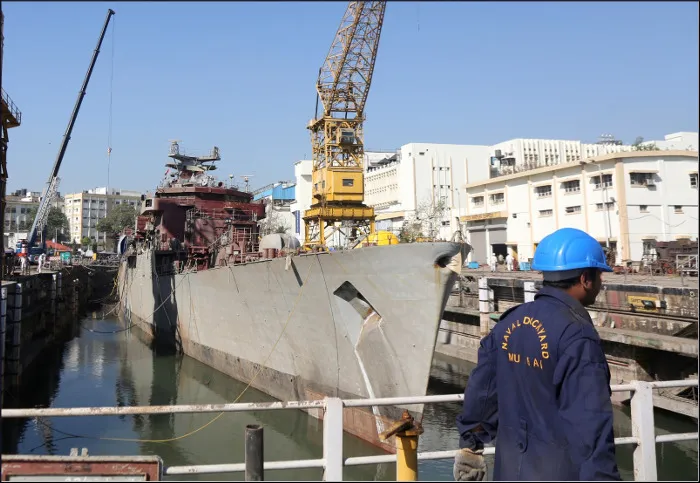
India's Arsenal Awakening: Why Washington Can No Longer Treat New Delhi as a Junior Partner
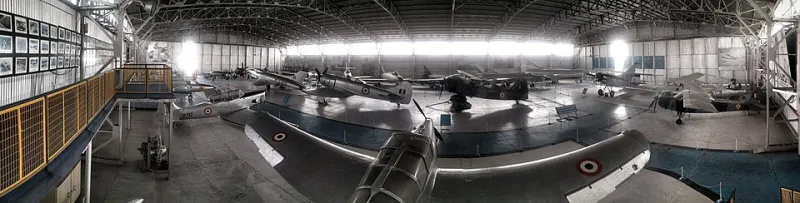
Photo: DiplomatTesterMan, CC BY-SA 4.0, via Wikimedia Commons
For decades, Washington's engagement with India was shaped by a quiet but persistent assumption—that New Delhi would remain a capable but dependent partner, grateful for technology transfers and eager to align its strategic posture with American preferences. That assumption is now collapsing under the weight of evidence, and the reverberations are being felt in Pentagon planning rooms and State Department briefings alike.
India is not simply buying more weapons. It is building a fundamentally different kind of military.
From Procurement to Production
The transformation underway within India's defense establishment is structural rather than incremental. The country's Defence Research and Development Organisation (DRDO) has moved beyond its reputation for delayed timelines and modest outputs. The Tejas Mk1A light combat aircraft, now in active induction with the Indian Air Force, represents a domestically engineered platform capable of competing with fourth-generation fighters fielded by regional adversaries. More consequentially, the Tejas Mk2 and the Advanced Medium Combat Aircraft (AMCA) programs signal India's intent to develop fifth-generation stealth capabilities without relying on foreign design architecture.
This matters enormously to Washington. When India operates platforms built on American or European blueprints, interoperability is relatively straightforward. When India fields systems developed entirely within its own industrial base, the calculus changes. Shared data links, compatible sensor fusion, and coordinated electronic warfare become negotiation points rather than operational defaults.
The missile domain tells a similarly striking story. The BrahMos supersonic cruise missile—a joint venture with Russia that India has since adapted and expanded—now exists in air-launched, ship-launched, and land-attack variants. Its export to the Philippines, facilitated with tacit American encouragement, demonstrated that India is not merely a consumer of strategic technology but an emerging supplier capable of extending deterrence to third parties. Meanwhile, the Agni-V ballistic missile, with its demonstrated intercontinental range, places India firmly in the tier of nations capable of credible second-strike nuclear deterrence.
The Asset-and-Wildcard Problem
American strategists are grappling with what might be called the asset-and-wildcard paradox. India's growing military capability is undeniably valuable to the United States in the context of its competition with China. A powerful, modernizing Indian military on Beijing's southwestern flank constrains Chinese strategic planning, forces a dispersal of People's Liberation Army resources, and provides a credible counterweight that no American ally in the region can replicate.
Yet that same independence creates friction. India's continued procurement of Russian military equipment—including the S-400 air defense system, which triggered CAATSA sanction considerations in Washington—illustrates the limits of American influence over New Delhi's defense choices. India does not view its strategic autonomy as a bargaining chip to be traded for closer alignment with any single power. It views it as a foundational national interest, one that predates the current geopolitical moment and will outlast any individual administration in Washington.
This is not obstinance. It is doctrine. Indian strategic culture, shaped by decades of non-alignment and reinforced by the experience of great-power pressure during the Cold War, instinctively resists the kind of binding commitments that Washington has come to expect from treaty allies in Europe and the Pacific.
Recalibrating the Partnership Framework
Some of the most significant adjustments in US-India defense relations are happening quietly, in the technical and institutional spaces that rarely attract headlines. The signing of foundational defense agreements—LEMOA, COMCASA, and BECA—has created the plumbing for genuine military interoperability. Joint exercises like Yudh Abhyas and Malabar have grown in complexity and ambition. The iCET initiative, launched to accelerate cooperation on critical and emerging technologies, signals a recognition in Washington that India's defense-industrial capacity is worth cultivating as a strategic asset rather than merely managing as a procurement relationship.
But these frameworks are straining against the pace of India's self-generated momentum. As Indian platforms become more sophisticated and less dependent on foreign components, the leverage that technology sharing once provided Washington begins to diminish. The relationship must evolve from one structured around American provision and Indian reception toward something more genuinely bilateral—a partnership of near-equals with overlapping but not identical interests.
What Washington Must Accept
The strategic community in Washington is slowly arriving at a conclusion that some analysts have argued for years: the United States cannot manage India's rise, only engage it. Attempting to condition defense cooperation on alignment with American preferences will produce neither alignment nor cooperation. What it will produce is a more cautious, more distant New Delhi that hedges its strategic bets with greater deliberateness.
The more productive path requires accepting that India's military independence is a feature, not a bug, of a genuinely multipolar Indo-Pacific order. A self-sufficient Indian military that can operate independently across the Himalayan frontier, the Arabian Sea, and the Indian Ocean littoral is an asset to regional stability whether or not it is formally integrated into American operational planning.
Washington's task is not to harness India's military modernization to American strategy. It is to build a relationship resilient enough to function even when the two countries disagree—which, given the divergent pressures each faces, they will.
The silent revolution in India's defense establishment is already underway. The question is whether American policymakers are moving fast enough in their own thinking to keep pace with it.