Listening Posts and Littorals: How India's Maritime Intelligence Architecture Is Becoming America's Most Consequential Asset in the Indian Ocean
A Network Built in Silence
For decades, India's naval intelligence capabilities occupied a secondary position in American strategic assessments—acknowledged in diplomatic communiqués but rarely elevated to the level of genuine operational significance. That calculus has shifted considerably over the past five years. Across a vast maritime corridor stretching from the Andaman Sea to the Gulf of Aden, India has assembled a layered intelligence architecture that combines shore-based listening stations, forward-deployed reconnaissance assets, and an increasingly robust human intelligence network embedded within port communities, fishing cooperatives, and commercial shipping channels.
The result is a picture of the Indian Ocean that no satellite constellation can fully replicate. Washington is paying attention.
Senior officials within the US Indo-Pacific Command have, in recent years, moved beyond treating India as a peripheral intelligence partner. Bilateral frameworks such as the Basic Exchange and Cooperation Agreement, signed in 2020, formalized the sharing of geospatial intelligence between New Delhi and Washington. But the deeper story lies not in the formal agreements—it lies in the operational texture of what India is actually collecting and how that collection complements, and in several critical respects surpasses, American surveillance reach across the region.
The Chokepoints That Define the Competition
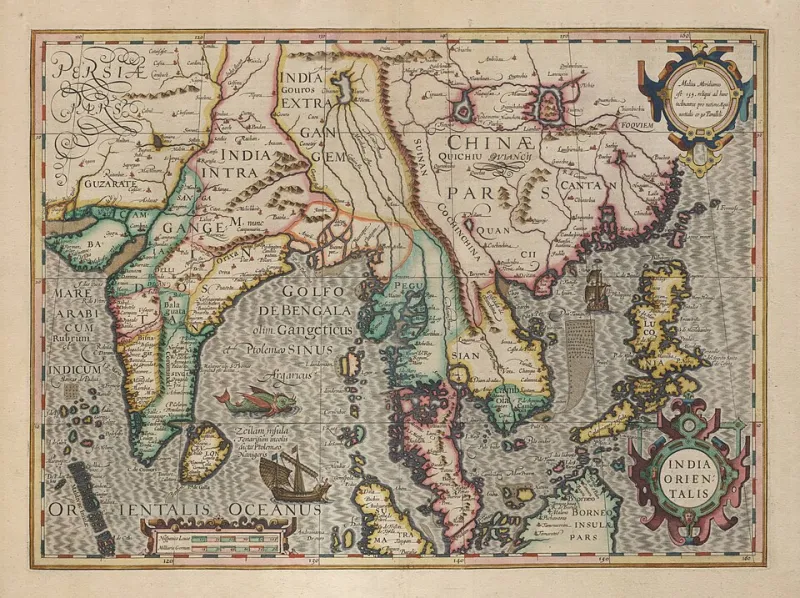
To understand why India's maritime intelligence posture matters to American strategists, it is essential to appreciate the geography of the contest. The Indian Ocean Region is not a single theater but a constellation of chokepoints, each carrying decisive economic and military weight. The Strait of Malacca channels approximately one-third of global maritime trade. The Strait of Hormuz governs the flow of Gulf energy exports to Asia and Europe. The Bab-el-Mandeb links the Red Sea to the Gulf of Aden and, ultimately, to the Suez Canal.
China's People's Liberation Army Navy has spent the better part of two decades cultivating access and basing arrangements along this corridor—from Djibouti to Gwadar to the contested waters of the South China Sea. The strategic logic is straightforward: control the chokepoints, and you hold leverage over the global economy.
India sits at the geographic center of this competition. Its coastline extends over 4,600 miles. Its island territories in the Andaman and Nicobar archipelago position New Delhi directly astride the western approach to the Strait of Malacca. Its naval stations along the eastern and western seaboards provide persistent coverage of shipping lanes that Beijing cannot afford to have monitored—and yet cannot prevent India from watching.
HUMINT Where Satellites Cannot Reach
Technical intelligence collection—signals interception, satellite imagery, acoustic monitoring—provides essential inputs to maritime situational awareness. But it carries inherent limitations. Submarines operating in deep water can evade acoustic arrays. Encrypted communications traffic can be collected but not always decrypted in operationally relevant timeframes. Port activities involving dual-use infrastructure resist clean categorization from overhead imagery alone.
This is where India's human intelligence network has demonstrated particular value. Over generations, Indian merchant mariners, fishing communities, and diaspora populations have established deep roots across the Indian Ocean littoral—from the Swahili Coast of East Africa to the Persian Gulf states to the port cities of Southeast Asia. These networks, cultivated and maintained through a combination of formal intelligence tradecraft and longstanding cultural ties, provide granular, ground-level reporting that supplements technical collection in ways that American analysts find difficult to replicate independently.
New Delhi's Research and Analysis Wing, the country's external intelligence service, has historically maintained a significant maritime intelligence component. Over the past decade, coordination between RAW and the Indian Navy's intelligence directorate has reportedly deepened, producing a more integrated collection architecture that draws on both technical and human sources to build comprehensive operational pictures of adversary naval movements, port infrastructure development, and logistics patterns.
The Andaman Pivot
No discussion of India's maritime intelligence posture is complete without examining the strategic significance of the Andaman and Nicobar Command, established in 2001 as India's first tri-service theater command. Located approximately 90 miles from the northern tip of Sumatra, the Andaman Islands place Indian reconnaissance assets within direct range of the Malacca Strait's western entrance.
Over the past several years, India has invested substantially in expanding the surveillance infrastructure across this archipelago. Upgraded radar installations, extended patrol aircraft operating facilities, and enhanced signals intelligence collection platforms have transformed the Andaman and Nicobar Command from a lightly resourced outpost into a genuine strategic listening post. P-8I Poseidon maritime patrol aircraft—acquired from Boeing and operated by the Indian Navy—now conduct regular missions from Andaman facilities, collecting acoustic, signals, and imagery intelligence across the eastern Indian Ocean.
For American planners, the significance is considerable. The P-8I's sensor suite is broadly comparable to that of the US Navy's own P-8A Poseidon fleet, and India's willingness to share collection derived from these platforms represents an intelligence dividend that would be operationally and politically difficult for Washington to generate unilaterally.
Building the Architecture of Trust
The intelligence relationship between India and the United States has not always operated smoothly. Historical ambivalence on New Delhi's part toward formal alliance structures, combined with India's longstanding procurement relationships with Russia, created friction points that complicated deeper intelligence sharing for years. The 2016 designation of India as a Major Defense Partner, followed by the signing of the foundational defense agreements, provided the institutional scaffolding necessary to move beyond episodic cooperation toward something more systematic.
What has emerged is not a formal alliance in the NATO sense—and Indian strategic culture remains deeply resistant to that framing—but rather a functional intelligence partnership calibrated to shared threat perceptions. Both capitals view Chinese naval expansion in the Indian Ocean with alarm. Both have institutional interests in maintaining freedom of navigation across the region's critical sea lanes. Both benefit from a division of labor in which India's geographic position and regional relationships provide access that American assets alone cannot easily secure.
Why Washington Cannot Afford Complacency
The temptation in Washington, particularly within bureaucratic cultures accustomed to treating intelligence partnerships hierarchically, is to view India as a valued but ultimately subordinate contributor to American-led surveillance frameworks. That framing increasingly misreads the operational reality.
India's maritime intelligence capabilities are not a supplement to American power in the Indian Ocean—they are, in several respects, an independent architecture that Washington depends on more than official discourse typically acknowledges. As Chinese counter-intelligence operations targeting American surveillance assets intensify, and as Beijing's diplomatic pressure on smaller regional states limits Washington's basing and access options, India's willingness to share its collection becomes not merely useful but strategically essential.
Policymakers in both capitals would be well served by investing in the institutional mechanisms—secure communication channels, joint analytical frameworks, coordinated collection priorities—that translate India's maritime intelligence capabilities into durable strategic advantage. The Indian Ocean's balance of power will not be determined solely by the vessels that sail its waters. It will also be shaped, profoundly, by who is listening most carefully beneath the surface.