Steel Hulls and Strategic Patience: India's Methodical Rise as the Indo-Pacific's Indispensable Power
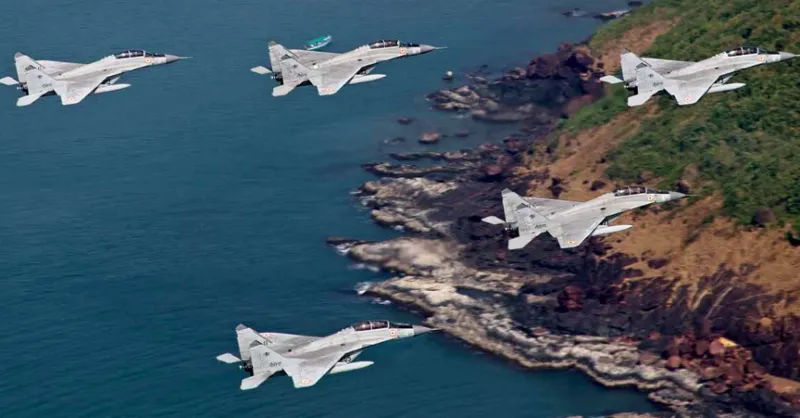
Photo: Indian Navy, GODL-India, via Wikimedia Commons
There is a particular kind of strategic patience that distinguishes India's foreign and defense policy from that of its great-power counterparts. Where Washington often seeks rapid coalition-building and Beijing pursues aggressive positional advantage, New Delhi moves with a deliberate, almost geological tempo — accumulating capability, deepening relationships, and expanding presence across the Indo-Pacific without the declaratory fanfare that typically accompanies such ambitions.
The result, now visible to any serious regional analyst, is an India that has positioned itself as an indispensable node in the architecture of Indo-Pacific security — one whose cooperation is actively courted by the United States, Japan, and Australia, and whose strategic choices carry consequences well beyond its own borders.
The Quad's Unlikely Evolution
The Quadrilateral Security Dialogue — the grouping comprising the United States, India, Japan, and Australia — has traveled a remarkable distance from its origins as a post-tsunami humanitarian coordination mechanism in 2004. Revived in 2017 and elevated to leader-level summitry in 2021, the Quad today functions as the most significant multilateral security framework in the Indo-Pacific that does not carry a formal treaty obligation.
India's role within this grouping has been the subject of considerable analytical debate. New Delhi has consistently resisted characterizations of the Quad as an explicitly anti-China military alliance, preferring to emphasize its positive agenda — maritime domain awareness, infrastructure investment, vaccine diplomacy, and cybersecurity cooperation. This rhetorical positioning is not mere diplomatic hedging; it reflects a genuine and deeply held strategic calculation.
India maintains a land border with China spanning approximately 3,500 kilometers, a relationship scarred by the 1962 war and punctuated by periodic confrontations, most recently the deadly clashes in the Galwan Valley in June 2020. For New Delhi, the challenge of managing China is simultaneously a land-border problem, a maritime competition, and an economic rivalry — a complexity that makes simple alliance framing strategically counterproductive.
Naval Expansion: Tonnage as Testimony
Yet if India's declaratory posture remains carefully calibrated, its material investments tell a less ambiguous story. The Indian Navy is in the midst of its most ambitious expansion in decades, one that signals a clear intent to project power well beyond the country's immediate littoral environment.
The commissioning of INS Vikrant in 2022 — India's first domestically constructed aircraft carrier — marked a watershed moment. At approximately 45,000 tonnes displacement and capable of operating MiG-29K fighters and the naval variant of the Light Combat Aircraft, Vikrant provides India with a power projection platform that meaningfully extends its reach into the western Indian Ocean, the Andaman Sea, and potentially the South China Sea.
Complementing the carrier program is a sustained submarine acquisition effort. India currently operates a fleet of conventionally powered submarines supplemented by the nuclear-powered INS Arihant — the first submarine built and operated by a nation outside the five permanent members of the UN Security Council. A second vessel, INS Arighat, has been commissioned, and the long-range Arihant-class program continues to expand India's sea-based nuclear deterrent.
Surface combatant construction is equally active. Project 17A frigates, incorporating stealth features and advanced sensor suites, are rolling out from Indian shipyards. The Navy has also commissioned additional P-8I Poseidon maritime patrol aircraft from the United States — platforms that provide long-range anti-submarine warfare and maritime surveillance capabilities directly relevant to monitoring Chinese submarine activity in the Indian Ocean Region.
Exercise Diplomacy and Operational Interoperability
Beyond hardware, India has dramatically expanded the tempo and complexity of its joint military exercises with Quad partners and other aligned nations. The Malabar naval exercise, originally a bilateral US-India event, now routinely incorporates Japan and has grown in scope to include anti-submarine warfare, carrier strike group operations, and complex multi-domain coordination drills.
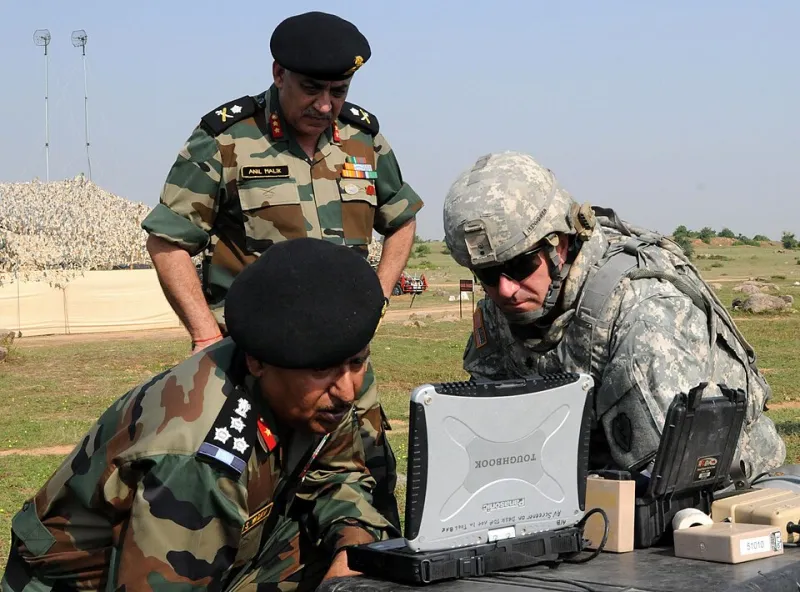
Exercise Tasman Saber with Australia, Cope India with the US Air Force, and the expanding Yudh Abhyas ground force exercise series collectively represent an operational relationship of increasing depth. Crucially, these exercises are generating genuine interoperability — shared communications protocols, compatible logistics procedures, and practiced command relationships that would matter significantly in a real contingency.
For American military planners, this interoperability is not merely symbolically reassuring. It translates into concrete operational options. An Indian Navy capable of coordinating effectively with US carrier strike groups in the eastern Indian Ocean fundamentally changes the strategic geometry that Chinese naval planners must account for.
Where Indian and American Interests Converge — and Where They Don't
Honest analysis requires acknowledging that the US-India strategic alignment, while substantial, is not without friction points. India's continued procurement of Russian military equipment — including the S-400 Triumf air defense system — has generated persistent tension with Washington, which has thus far declined to impose CAATSA sanctions on New Delhi while making clear its preference for a shift away from Russian platforms.
India's posture on the war in Ukraine has also diverged from American preferences. New Delhi has abstained on UN resolutions condemning the Russian invasion and continued purchasing discounted Russian oil, positions rooted in a longstanding non-alignment tradition and the practical reality of deep defense supply dependencies that cannot be unwound overnight.
These divergences are real and should not be minimized. However, they operate within a broader framework of converging strategic interests that remains structurally durable. Both nations share a fundamental interest in preventing Chinese hegemony over the Indo-Pacific maritime commons. Both benefit from a rules-based order that protects freedom of navigation and overflight. And both recognize that the bilateral relationship offers capabilities and influence that neither can fully replicate through alternative partnerships.
New Delhi's Doctrine: Primacy Without Provocation
What emerges from examining India's naval expansion, exercise patterns, and Quad engagement is the outline of a coherent strategic doctrine — one that might be characterized as primacy without provocation. India seeks to establish itself as the pre-eminent power in the Indian Ocean Region, the indispensable partner in the broader Indo-Pacific, and the credible counterweight to Chinese expansionism — all without triggering the kind of direct confrontation that its geographic vulnerability to Chinese land and maritime pressure makes strategically costly.
This doctrine demands patience, sustained investment, and a tolerance for strategic ambiguity that can frustrate American policymakers accustomed to cleaner alliance commitments. But it also produces an India that is steadily, methodically, and perhaps irreversibly enlarging its strategic footprint across the waters that connect the Persian Gulf to the Pacific.
For the United States, the imperative is clear: engage India on its own strategic terms, invest in the relationship's institutional depth, and recognize that New Delhi's path to Indo-Pacific leadership — however distinctive — serves American interests in ways that no other regional partner can replicate.