Forging Independence: How India's Defense Manufacturing Surge Is Redrawing the Architecture of Global Arms Supply Chains

Photo by Photo by Jarnail Singh on Unsplash on Unsplash
For decades, India occupied a peculiar position in the global arms trade — the world's largest weapons importer, perpetually dependent on foreign platforms, foreign components, and foreign goodwill. That arrangement suited certain capitals well. It did not, ultimately, suit New Delhi. What has followed is one of the most consequential industrial transformations in contemporary defense history, and Washington has only recently begun to appreciate the full weight of what is unfolding.
India's Atmanirbhar Bharat — self-reliant India — doctrine, elevated to strategic imperative under Prime Minister Narendra Modi's government, has moved well beyond aspirational policy. It has become an operational reality with measurable consequences for how defense supply chains are structured, where manufacturing capacity is concentrated, and which nations hold leverage in future conflict scenarios.
From Import Dependency to Industrial Ambition
The numbers tell a striking story. India's defense exports stood at approximately $250 million annually just a decade ago. By fiscal year 2023-24, that figure had climbed past $2.6 billion, with a stated government target of $5 billion by 2025. The trajectory is not accidental. It is the product of deliberate policy architecture: negative import lists that progressively bar foreign procurement of items India can manufacture domestically, mandated industrial offsets, and the elevation of state-owned defense undertakings alongside a newly energized private sector.
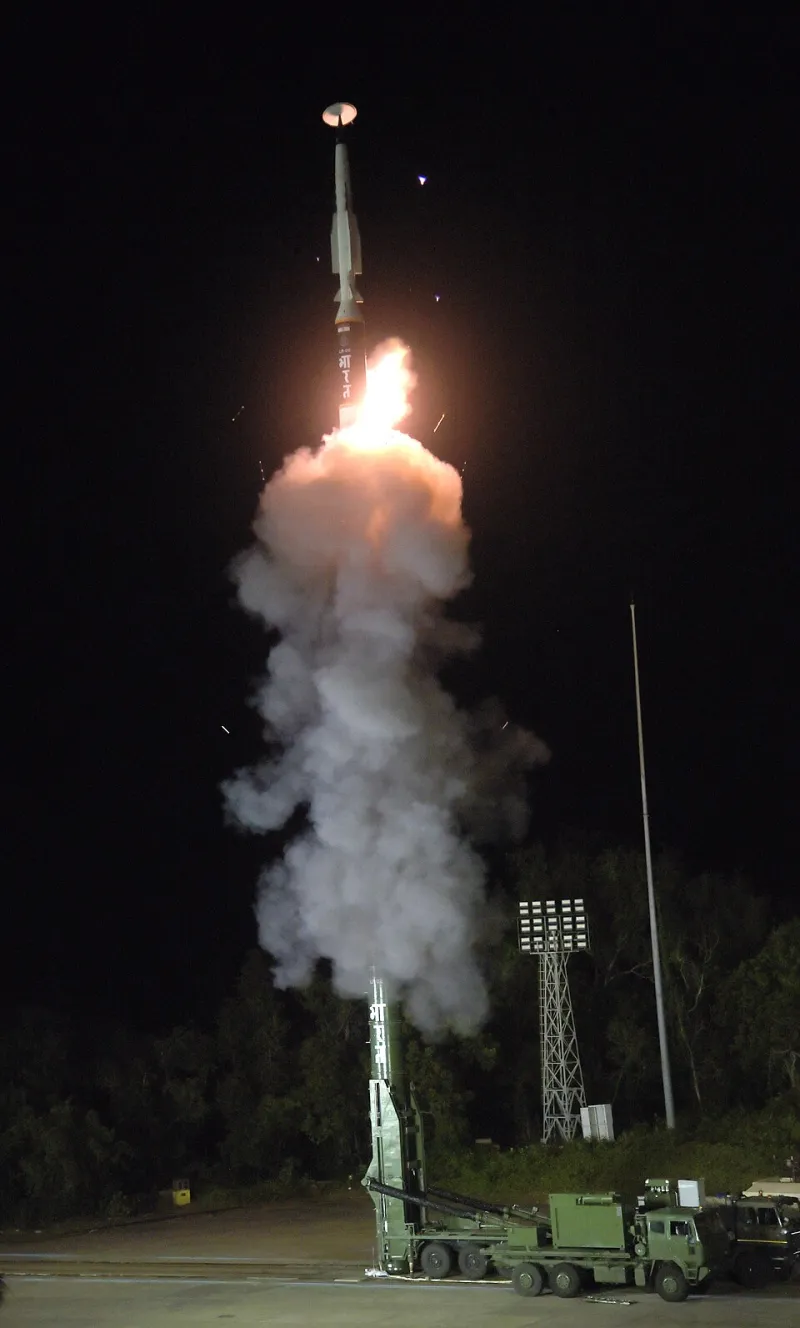
Companies such as Tata Advanced Systems, Mahindra Defence, and Larsen & Toubro have moved from peripheral roles to central positions in India's defense industrial ecosystem. Meanwhile, the Defence Research and Development Organisation (DRDO) has accelerated the indigenization of critical technologies — from the Tejas light combat aircraft and the Arjun main battle tank to the Pinaka multi-barrel rocket system and the Astra beyond-visual-range air-to-air missile.
For American observers, the significance of this shift extends well beyond admiration for Indian industrial ambition. It carries direct implications for how the United States thinks about dependency, leverage, and partnership.
Disrupting the Traditional Arms Market Hierarchy
The conventional architecture of global arms supply has long reflected a clear hierarchy: a small cluster of Western nations — the United States preeminent among them — supply advanced platforms and critical subsystems to a wide array of purchaser nations. That hierarchy conferred not merely commercial advantage but strategic influence. Arms relationships are, invariably, relationships of dependency, and dependency is a form of power.
India's emergence as both a self-sufficient producer and an increasingly competitive exporter disrupts that hierarchy in ways that should concentrate minds in Washington. When New Delhi supplies BrahMos supersonic cruise missiles to the Philippines, when Indian-manufactured artillery systems attract interest across Southeast Asia and Africa, when Tejas fighters enter serious procurement discussions with multiple nations — a new node in the global arms supply network is coming into being.
This is not a node aligned against American interests. But it is a node that operates with its own logic, its own pricing, and its own strategic calculations. For US defense contractors accustomed to operating in markets where American platforms faced limited non-Western competition, the terrain is shifting.
The Quad Dimension: Resilience Through Diversification
Perhaps the most strategically consequential dimension of India's manufacturing rise is what it means for Quad supply chain architecture. The Quadrilateral Security Dialogue — comprising the United States, India, Japan, and Australia — has devoted increasing attention in recent years to the vulnerabilities exposed by over-concentration of critical manufacturing in the People's Republic of China. Defense industrial resilience has emerged as a central Quad priority.
India's growing manufacturing capacity offers the Quad something genuinely valuable: a large-scale, non-Western production base that sits outside Beijing's sphere of economic coercion. For components ranging from semiconductors and rare earth processing to propulsion systems and precision-guided munitions, an India that can manufacture reliably and at scale represents a meaningful hedge against supply chain interdiction in a contingency scenario.
American defense planners have begun to internalize this logic. The iCET — the Initiative on Critical and Emerging Technology — framework established between Washington and New Delhi in 2023 reflects a recognition that technological co-production with India serves American strategic interests in ways that go beyond any single weapons system. It is about building redundancy into the supply architecture of the Quad as a whole.
Washington's Adjustment: Competition, Collaboration, and Calculation
For US defense contractors, India's industrial ascent presents a genuinely complex calculus. On one level, it represents competition — Indian-manufactured systems entering markets where American platforms previously faced limited rivalry. On another level, it represents opportunity: co-production arrangements, technology-sharing frameworks, and joint ventures that give American firms access to India's cost-competitive manufacturing base and its rapidly expanding engineering talent pool.
The GE Aerospace agreement to co-produce F414 jet engines in India — powering the next generation of Tejas fighters — exemplifies this dual dynamic. General Electric gains access to an Indian production footprint and a long-term partnership with a rising defense market. India gains critical engine technology and a pathway toward genuine propulsion self-sufficiency. Both sides gain a deepened industrial relationship that carries strategic weight beyond the commercial transaction.
The critical question for Washington is whether American policy frameworks can evolve quickly enough to capture the full benefit of this emerging partnership. Export control regimes, technology transfer restrictions, and bureaucratic inertia within the US defense establishment have historically constrained the depth of industrial cooperation with India. In a strategic environment where Quad cohesion increasingly depends on shared industrial capacity, those constraints carry a cost that is no longer easy to dismiss.
The Longer Arc: A New Center of Gravity
India's defense manufacturing ambitions are not yet fully realized. Significant capability gaps persist. Indigenization timelines have slipped before and will likely slip again. The challenge of building a deep, competitive private defense sector in a country long dominated by state-owned enterprises is formidable and ongoing.
But the direction is unmistakable. New Delhi is building toward a defense industrial base that can sustain its own armed forces without external dependency, supply partners across the developing world, and participate as a genuine co-equal in advanced technology development with Western allies. That is a fundamentally different India from the one that topped global arms import rankings for consecutive decades.
For the United States, the strategic imperative is clear: engage this transformation as a partner rather than observe it as a bystander. The alternative — an India that builds its industrial independence in parallel with, rather than in concert with, American strategic interests — is a far less favorable outcome for Washington's long-term position in the Indo-Pacific.
India's shield is being forged in its own foundries now. The world — and Washington in particular — would do well to understand what that means.