Mach 8 and Rising: How India's Hypersonic Weapons Program Is Forcing a Strategic Reckoning Across the Indo-Pacific
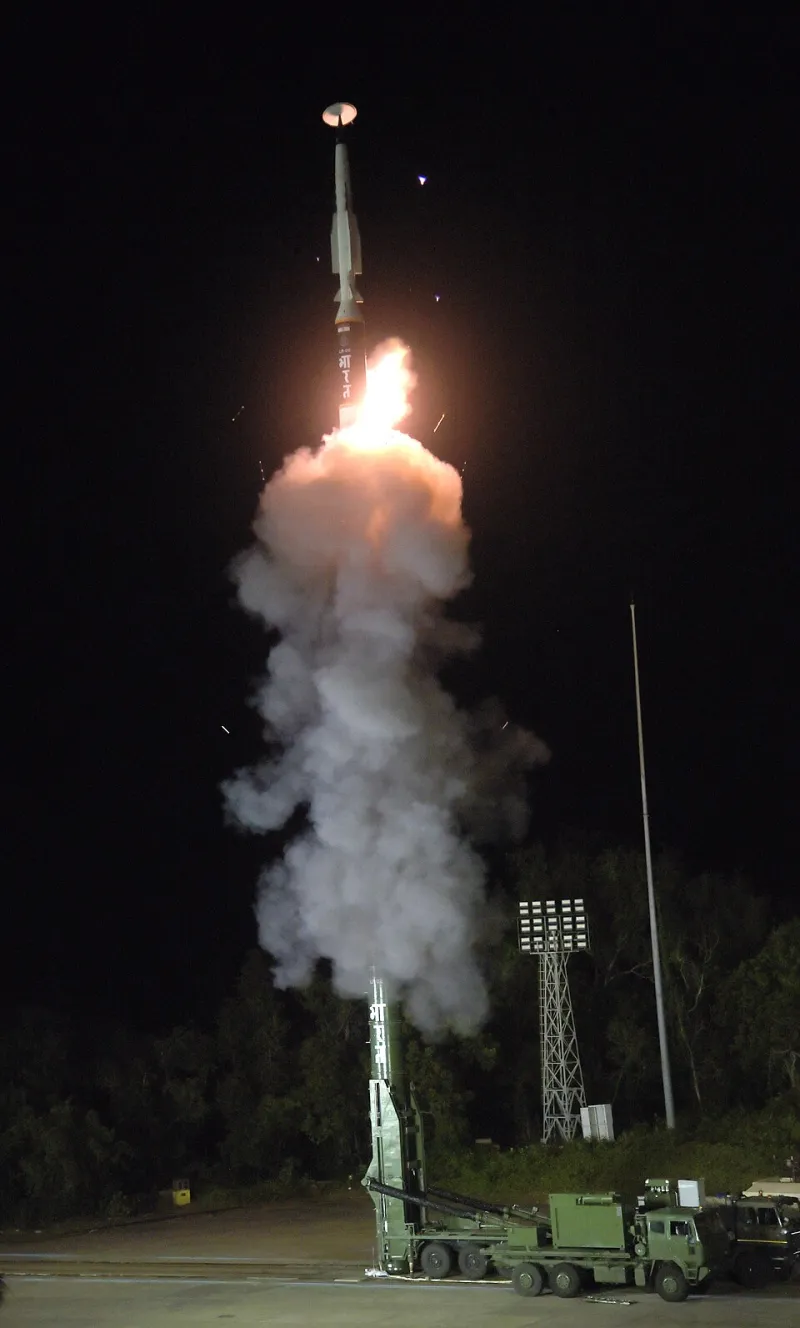
Photo: Government of India, GODL-India, via Wikimedia Commons
For decades, hypersonic weaponry occupied the exclusive domain of the United States, Russia, and China — a technological triumvirate whose members jealously guarded their advances behind layers of classification and national pride. That exclusivity is eroding. India's Defense Research and Development Organisation (DRDO), operating with a quiet intensity that belies the magnitude of its ambitions, has been steadily assembling the building blocks of a credible hypersonic strike capability. What was once treated as an aspirational footnote in New Delhi's defense modernization agenda is now commanding serious attention in Pentagon briefing rooms and among strategic analysts who track the shifting geometry of Indo-Pacific power.
The acceleration is not incidental. It reflects a deliberate recalibration of India's national security doctrine — one that increasingly acknowledges the inadequacy of conventional deterrence against adversaries who are themselves fielding next-generation strike systems. Understanding what India has built, what it is building, and what that means for the United States requires looking beyond the test-range headlines.
What India Has Already Demonstrated
India's hypersonic journey gained measurable momentum with the successful test of the Hypersonic Technology Demonstrator Vehicle (HSTDV) in September 2020. Developed by DRDO, the vehicle achieved sustained hypersonic flight using a domestically engineered scramjet engine — a propulsion system that demands extraordinary precision in design, materials science, and aerodynamics. The test was notable not merely for what it achieved, but for what it signaled: India had independently mastered a core enabling technology that only a handful of nations possess.
Subsequent development work has built upon that foundation. Reports from Indian defense establishment sources indicate active work on hypersonic glide vehicles and air-launched hypersonic missile configurations, the latter of which would grant Indian strike aircraft the ability to engage hardened targets at ranges and speeds that render current air defense systems largely ineffective. When combined with India's expanding fleet of Sukhoi Su-30MKI fighters and the anticipated induction of additional advanced platforms, the air-launched dimension of this capability takes on particular strategic weight.
Perhaps most significantly, India's hypersonic program is not being pursued in isolation. It is embedded within a broader matrix of precision-strike development that includes the BrahMos supersonic cruise missile — itself the product of an Indo-Russian joint venture — and long-range ballistic systems under the Agni series. Hypersonic weapons do not replace these systems; they complement them, adding a layer of penetration capability that complicates adversary planning in ways that no single conventional system can replicate.
Why Washington Is Paying Close Attention
American strategic planners have spent considerable energy in recent years wrestling with the challenge posed by China's hypersonic arsenal. Beijing's DF-17 hypersonic glide vehicle, first publicly displayed during a 2019 military parade, and the subsequent revelation of a fractional orbital bombardment system test in 2021 introduced a category of threat that exposed gaps in existing US and allied missile defense architecture. The uncomfortable truth, acknowledged by senior Pentagon officials, is that no current deployed system offers reliable intercept capability against maneuvering hypersonic threats.
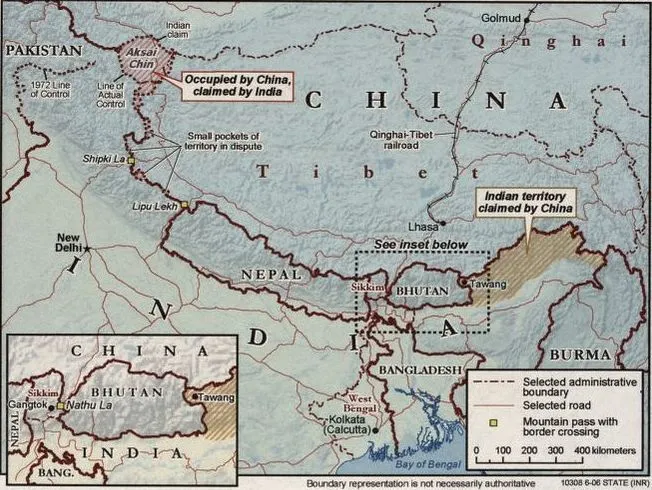
India's emergence as a hypersonic power does not resolve that American vulnerability. What it does is introduce a meaningful complication into Chinese strategic calculus — and that, from Washington's perspective, carries real value. A Chinese military planner contemplating aggressive action in the South China Sea, the Taiwan Strait, or along the Himalayan frontier must now account for the possibility of hypersonic strikes originating from Indian territory or Indian naval platforms. That is a second-front consideration of a qualitatively different order than anything New Delhi could previously threaten.
The United States and India have deepened their defense technology cooperation substantially over the past decade, culminating in the 2023 Initiative on Critical and Emerging Technology (iCET), which explicitly identified hypersonic systems as an area of mutual interest. While full technology transfer in this domain remains politically and legally complex, the framework for collaborative development and intelligence-sharing around hypersonic threats has been meaningfully expanded. For American strategists who have long sought a capable, sovereign partner in the Indo-Pacific — one not bound by the alliance treaty obligations that constrain Japan or South Korea — India's hypersonic progress represents a genuine strategic dividend.
The Deterrence Architecture India Is Building
Deterrence, in its most functional form, is not about the ability to win a war. It is about making the cost of initiating one unacceptably high. India's hypersonic program contributes to this architecture in at least three distinct ways.
First, it raises the threshold for any Chinese first-strike calculation. A hypersonic-armed India is an India whose retaliatory capacity cannot be cleanly neutralized by a preemptive conventional strike. Hardened command nodes, dispersed launch platforms, and the sheer speed of hypersonic delivery compress the decision-making window for any adversary to near zero.
Second, it provides India with an asymmetric response to China's own hypersonic investments. Beijing has poured substantial resources into developing systems specifically designed to hold US carrier strike groups and forward bases in the Western Pacific at risk. India's parallel development, while not targeting American assets, creates a mirror dynamic that forces Chinese planners to hedge their own force posture.
Third, and perhaps most consequentially over the long term, it reinforces India's credibility as a net security provider rather than a security consumer. This distinction matters enormously in Washington. A partner nation that contributes independently developed, high-end military capabilities to a shared strategic environment is a fundamentally different proposition than one that depends on American technology transfers and security guarantees to remain relevant.
The Road Ahead
India's hypersonic program still faces meaningful technical and industrial hurdles. Transitioning from a technology demonstrator to a fielded, operationally reliable weapons system is an engineering challenge of considerable complexity — one that has humbled programs far better resourced than DRDO's. Materials capable of withstanding sustained hypersonic flight temperatures, guidance systems precise enough to deliver meaningful terminal accuracy, and the production infrastructure needed to manufacture such weapons at scale all represent ongoing areas of development.
None of these challenges are insurmountable, and India's defense industrial base has demonstrated a growing capacity to absorb and apply complex technologies at pace. The trajectory is clear even if the timeline remains subject to the inherent uncertainties of advanced weapons development.
For the United States, the appropriate response is neither passive observation nor reflexive concern. India's hypersonic ascent is, on balance, a development that serves American strategic interests in the Indo-Pacific. The question for Washington is whether it will engage proactively — sharing relevant non-sensitive technical knowledge, coordinating on threat assessments, and integrating Indian hypersonic capabilities into broader Quad-level deterrence planning — or whether bureaucratic inertia will allow a historic strategic opportunity to mature more slowly than it should.
The missiles are already in motion. The only variable is whether American policy will keep pace with them.