Beyond the Himalayas: How India's Border Strategy Is Quietly Shaping the Outcome of America's Competition with Beijing

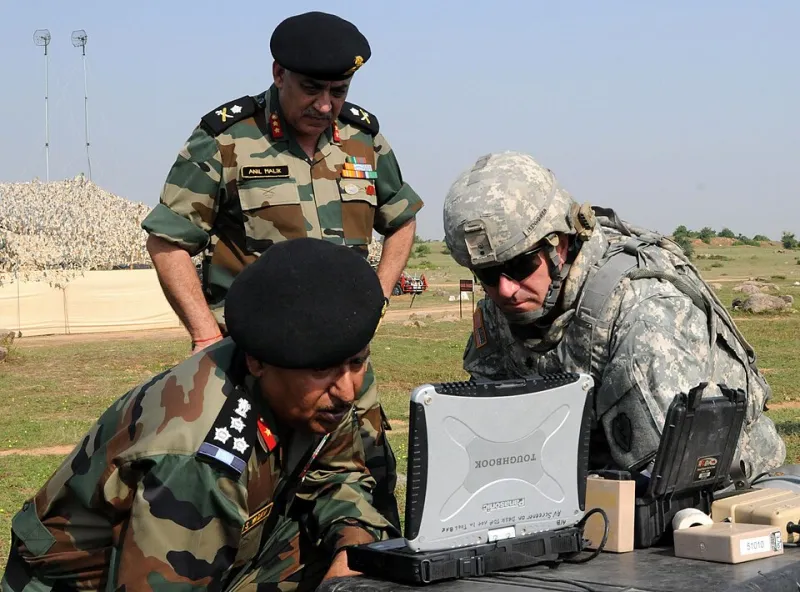
Photo: Indian Army Himalayan border patrol mountain troops high altitude military, via cdn.i-scmp.com
Washington's debate about China tends to orbit familiar coordinates: Taiwan, the South China Sea, semiconductor supply chains, and the military balance across the Pacific. These are legitimate and urgent concerns. But there is another theater of Sino-American competition that receives far less attention in the American policy discourse—one where the primary actor is not the United States at all, but a nuclear-armed democracy of 1.4 billion people that shares nearly 2,100 miles of contested, largely undemarcated frontier with the People's Republic of China.
India's management of that frontier, and the military doctrine it is developing to defend it, deserves serious attention from American strategists. Not because the United States has a direct stake in every Himalayan patrol standoff, but because the cumulative effect of India's choices along its northern and western borders is shaping Beijing's strategic calculus in ways that carry profound implications for American interests globally.
The String of Pearls Meets Its Counterweight
China's so-called String of Pearls strategy—a network of commercial ports, naval facilities, and diplomatic relationships stretching from the South China Sea through the Indian Ocean to the Persian Gulf—has long been analyzed through the lens of maritime competition. Less examined is how this strategy interacts with China's simultaneous pressure campaign along India's land borders, and how India's response to that pressure is constructing a form of strategic depth that complicates Beijing's planning on multiple axes simultaneously.
The 2020 Galwan Valley clash, which resulted in casualties on both sides for the first time in decades, was a watershed moment. It stripped away residual Indian illusions about a manageable relationship with Beijing and accelerated a military modernization effort that had been proceeding at a measured pace. What followed was a systematic program of frontier hardening that continues today.
India has dramatically accelerated the construction of roads, tunnels, bridges, and forward airstrips in border regions that were deliberately kept underdeveloped for decades—a legacy of Indian strategic thinking that prioritized denying infrastructure to a hypothetical invader over enabling rapid reinforcement of its own forces. That calculus has been decisively reversed. Dozens of road projects in border areas have been fast-tracked, and the infrastructure gap that once gave Chinese forces an operational advantage is narrowing with each passing year.
Force Modernization at Altitude
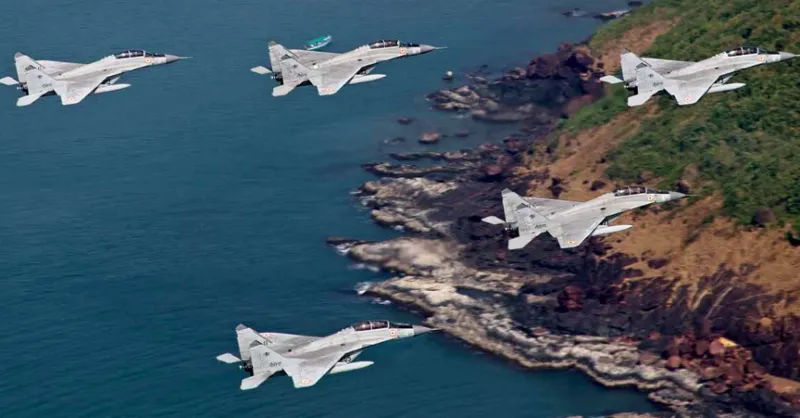
The physical infrastructure push has been accompanied by a comprehensive modernization of the forces assigned to the northern theater. India has raised new mountain strike corps capable of offensive operations at altitude—a departure from the traditionally defensive orientation of its Himalayan posture. Advanced artillery systems, including the indigenous Dhanush howitzer and the procured M777 ultralight howitzers, have been deployed to forward positions. The Indian Air Force has stationed Rafale fighters at bases within operational range of the Line of Actual Control.
Perhaps most significantly, India has invested heavily in intelligence, surveillance, and reconnaissance capabilities tailored to the unique demands of high-altitude warfare. Satellite imagery, drone networks, and electronic intelligence systems now provide Indian commanders with a situational awareness picture that was simply unavailable during previous confrontations with Chinese forces.
For American defense analysts, the relevance of these developments extends beyond the bilateral India-China dynamic. Every Chinese military resource committed to the Himalayan frontier—every mountain warfare unit, every logistics battalion, every air defense battery—is a resource that cannot be simultaneously deployed elsewhere. India, by compelling China to treat its land border as a serious strategic concern, is effectively performing a form of strategic load-bearing on behalf of the broader coalition of nations concerned about Beijing's ambitions.
The Nuclear Dimension
India's nuclear posture adds a further layer of complexity that American policymakers must factor into their regional assessments. India maintains a credible minimum deterrent underpinned by a no-first-use doctrine—a posture that has remained formally stable even as the capabilities supporting it have evolved considerably. The development of the Agni-V intercontinental ballistic missile, with its range sufficient to cover all of China's major population and industrial centers, has completed India's deterrence architecture in a meaningful way.
Less publicly discussed is how India's nuclear calculus intersects with its conventional military posture. New Delhi's investment in precision-guided munitions, long-range strike capabilities, and advanced missile systems—including the jointly developed BrahMos supersonic cruise missile—creates a conventional deterrence layer that is capable of imposing serious costs on an adversary well before nuclear thresholds become relevant. This layered deterrence framework is structurally analogous to the approach that American planners have long advocated for in other theaters.
Why This Matters to Washington
The connection between India's border doctrine and American strategic interests is not always linear, but it is real and consequential. Consider the following:
First, a China that is strategically distracted by a capable, modernizing, and increasingly assertive India on its southwestern flank is a China with fewer resources and bandwidth to dedicate to its primary competition with the United States in the Pacific. The strategic burden-sharing implicit in this dynamic has real value for American planners, even if it is never formalized in treaty language.
Second, India's experience managing a contested land border with China—including the intelligence tradecraft, the high-altitude warfare techniques, and the diplomatic management of gray-zone incidents—represents a body of knowledge with direct relevance to American security partners elsewhere. Mechanisms for sharing these lessons, whether through military-to-military exchanges or defense cooperation frameworks, could yield dividends well beyond the Himalayan theater.
Third, and perhaps most importantly, India's success or failure in maintaining credible deterrence along its northern frontier will send a signal that resonates across the entire Indo-Pacific. A China that perceives it has successfully intimidated or coerced India—extracting territorial concessions or forcing a strategic accommodation—will draw conclusions about the efficacy of similar pressure applied to other neighbors. Conversely, an India that maintains its territorial integrity and demonstrates the capacity to impose costs on Chinese adventurism reinforces the broader deterrence architecture that American strategy depends upon.
The Strategic Imperative
None of this suggests that Washington should attempt to manage India's border policy or presume to dictate its strategic choices. India's tradition of autonomous decision-making is not a negotiating position—it is a structural feature of its foreign policy that reflects deep domestic political realities. American policymakers who approach the relationship with that understanding will find a willing and capable partner. Those who do not will find frustration.
What the United States can do is ensure that its own policies—on technology transfer, defense trade, intelligence sharing, and diplomatic coordination—are calibrated to support Indian strategic capacity rather than complicate it. In the competition with Beijing, India's Himalayan frontier is not a sideshow. It is, for those willing to look carefully, one of the most consequential theaters on the board.