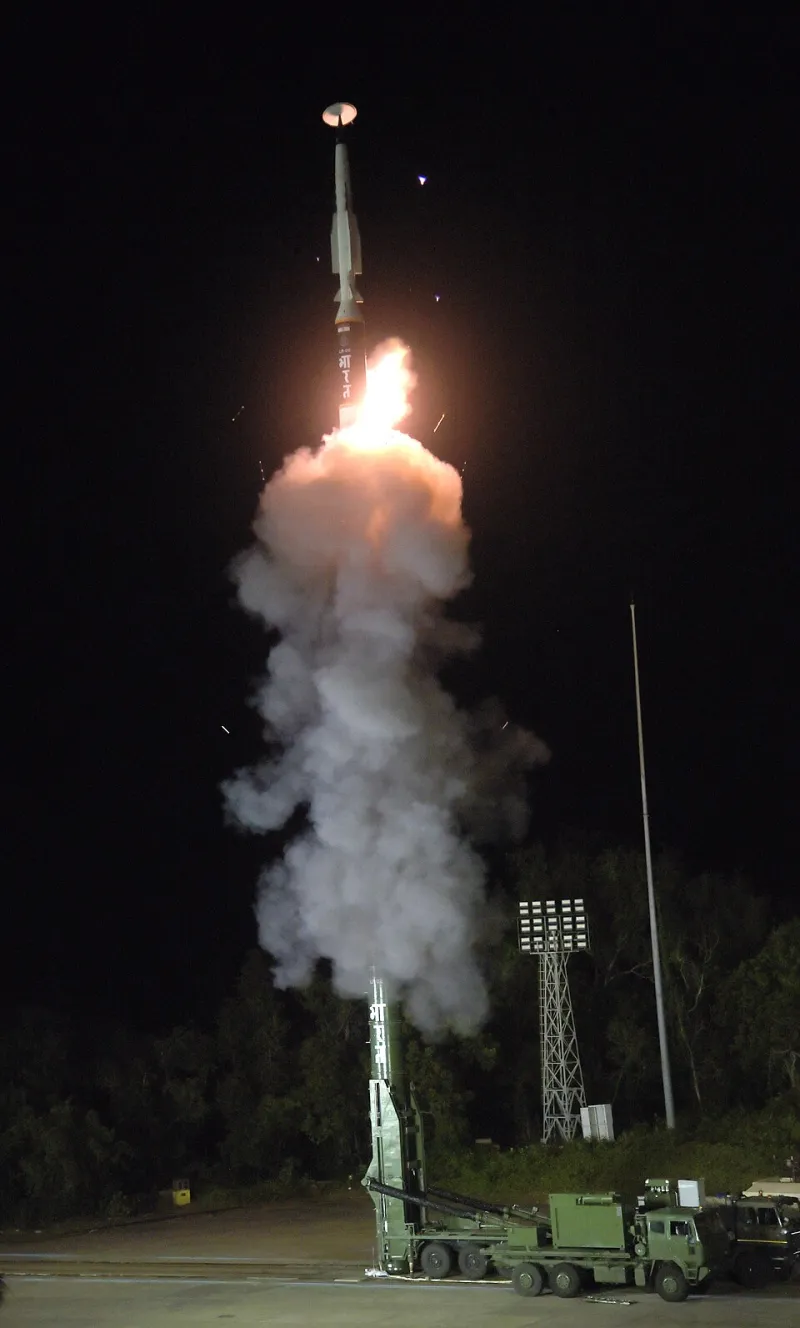
Venture Capital Meets the Battlefield: How India's Defense Startup Surge Is Rewriting the Rules of Military Procurement
A New Kind of Defense Industrial Base
For most of the post-Cold War era, India's defense procurement landscape was defined by two constants: chronic delays and foreign dependency. State-owned enterprises dominated the supply chain, and the Indian military often waited years—sometimes decades—for domestically produced platforms that arrived over budget and underspecified. Washington, for its part, learned to engage New Delhi through familiar channels: government-to-government agreements, licensed production arrangements, and the occasional co-development framework that moved at the pace of diplomatic negotiation rather than operational necessity.
That architecture is fracturing. Quietly but with considerable momentum, a new class of Indian defense company has emerged—smaller, faster, and structurally indifferent to the bureaucratic rhythms that governed its predecessors. These are not subsidiaries of conglomerates seeking to diversify revenue. They are purpose-built startups, many of them founded by engineers who cut their teeth at institutions like IIT Bombay or IISc Bangalore, backed by a combination of domestic venture capital and government seed funding, and focused on problem sets that legacy contractors have been slow to address.
The numbers are instructive. India's iDEX—Innovations for Defence Excellence—initiative has engaged over 400 startups since its launch in 2018, with the government committing increasing tranches of funding to accelerate the pipeline from prototype to procurement. The defense ministry has simultaneously relaxed foreign direct investment ceilings in the sector and created dedicated fast-track procurement categories for innovative small firms. The result is an ecosystem that, while still maturing, is producing deployable technology at a tempo that is beginning to surprise observers in Washington.
Autonomous Systems and the Speed Problem
Perhaps nowhere is the startup disruption more visible than in unmanned and autonomous systems. India's military has long recognized the strategic logic of drone proliferation—particularly given the terrain complexities of its borders with China and Pakistan—but the established procurement pathway was too slow and too expensive to meet operational timelines. Startups stepped into that gap.
Companies such as Ideaforge, which became the first Indian drone firm to list publicly, and a cluster of smaller entrants have moved from concept to fielded product in timeframes that would be unrecognizable to a Lockheed Martin program manager. Swarm coordination algorithms, AI-assisted target recognition, and edge-computing payloads are being integrated into platforms at iterative speed, tested in field conditions, and revised within weeks rather than years. The Indian Army's deployments along the Line of Actual Control have, by multiple accounts, served as a live proving ground that is accelerating the development cycle further.
For US planners, this carries a specific implication. The autonomous systems architecture that India is building is not being designed around American interoperability standards as a primary constraint. It is being optimized for Indian operational requirements first. That means future integration efforts—should Quad partners seek to field joint unmanned capabilities—will require deliberate bridging work that nobody has yet formally resourced.
Advanced Materials and Electronics: The Less Visible Revolution
Beyond unmanned platforms, the startup surge is penetrating supply chains that rarely generate headlines but carry considerable strategic weight. Advanced composite materials, electronic warfare components, thermal imaging sensors, and ruggedized communication hardware are all areas where Indian startups are displacing import dependency with domestic alternatives.
This matters because it directly addresses one of the more persistent vulnerabilities in India's defense posture: the exposure of its supply chain to geopolitical disruption. During periods of heightened tension with China—which shares a significant portion of the global electronics manufacturing base—the ability to source critical components domestically is not merely an economic preference. It is a strategic requirement. Startups operating in this space are, in effect, building the resilience architecture that India's military planners have demanded for years.
The US defense establishment has an obvious interest in this development, though its engagement has been uneven. American defense primes have begun exploring co-investment and technology-sharing arrangements with Indian startups, recognizing that the innovation velocity in Bengaluru and Hyderabad is generating intellectual property that could complement their own development programs. But the pace of that engagement has not consistently matched the pace of the ecosystem's evolution.
What Washington Is Getting Wrong
The risk for US strategic planners is one of category error. There is a tendency within established defense procurement bureaucracies—including the Pentagon's own acquisition offices—to evaluate foreign defense industries through the lens of platform capability: how many ships, how many aircraft, how many missiles. The Indian startup ecosystem does not fit that analytical frame neatly. Its output is not yet a fleet of fifth-generation fighters. It is, instead, a compounding accumulation of component-level and subsystem-level innovations that are gradually reducing India's dependence on any single foreign supplier, including the United States.
That trajectory has a strategic endpoint. An India that can indigenously source the electronics, materials, and autonomous systems that define modern warfare is an India with considerably more freedom of action in its foreign policy. It is an India that can decline arms packages it finds politically inconvenient, accelerate procurement timelines without waiting for export licensing approvals, and field capabilities calibrated to its own doctrine rather than inherited from a partner's platform architecture.
This is not inherently contrary to American interests—in fact, a more capable and self-sufficient India is generally a more effective counterweight to Chinese power projection in the Indo-Pacific. But it does require Washington to update its engagement model. Treating New Delhi as a customer for American defense exports is a frame that is becoming progressively less accurate and less strategically productive.
The Procurement Signal
Inside India's defense ministry, procurement decisions are already beginning to reflect the startup ecosystem's growing influence. Contracts that would historically have gone to state-owned enterprises by default are increasingly being contested—and won—by smaller, faster-moving firms. The political economy of this shift is significant: it is generating a constituency within India's private sector that has a direct commercial interest in sustaining defense innovation investment, which in turn creates durable pressure on the government to continue opening procurement channels.
For the Quad partnership to realize its full potential as a technology-sharing and interoperability framework, the United States will need to develop engagement mechanisms that reach this new constituency. That means moving beyond government-to-government arms sales as the primary mode of defense industrial relationship and investing in startup-to-startup and investor-to-investor linkages that can operate at the speed of the ecosystem itself.
The silent revolution underway in India's defense startup sector is not waiting for Washington to catch up. The question is whether American strategic planners will recognize what is happening in time to shape it—or whether they will arrive, as they have before in other domains, one innovation cycle too late.