Orbiting the Dragon: How India's Satellite Constellation Is Quietly Transforming US Intelligence in the Indo-Pacific
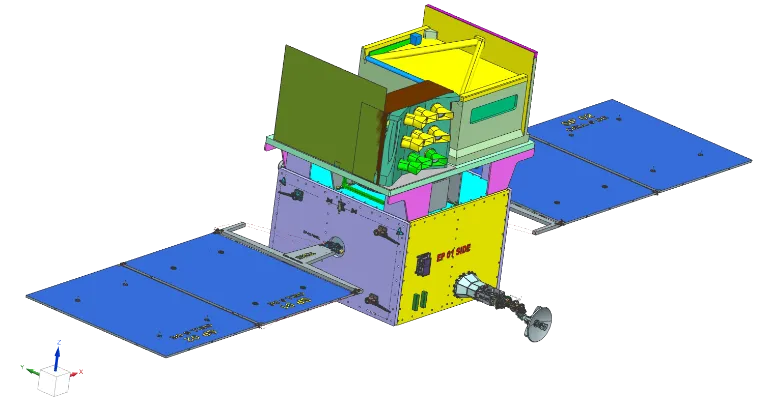
Photo: Indian Space Research Organisation, GODL-India, via Wikimedia Commons
A New Kind of Watchman
For decades, the United States maintained unrivaled dominance in space-based intelligence collection. Constellations of classified reconnaissance satellites, operated by the National Reconnaissance Office and augmented by commercial providers, formed the backbone of American situational awareness across every contested theater on earth. Yet the sheer geographic breadth of the Indo-Pacific — stretching from the Strait of Malacca to the waters east of Guam — has consistently strained even Washington's formidable orbital infrastructure. Enter India.
New Delhi's investment in space-based surveillance has accelerated with quiet but unmistakable purpose over the past decade. The Indian Space Research Organisation, long celebrated for its cost-efficient civilian missions, has steadily expanded its remit to encompass a growing suite of military and dual-use Earth observation platforms. What was once a civilian scientific enterprise has matured into a strategically oriented program with direct implications for how the United States monitors Chinese military activity across one of the world's most consequential maritime corridors.
The Architecture of Indian Orbital Power
India's reconnaissance infrastructure is anchored by its RISAT (Radar Imaging Satellite) series and the CARTOSAT constellation, platforms that provide all-weather, day-and-night imaging capability across vast stretches of ocean and coastline. The RISAT satellites, equipped with synthetic aperture radar, are particularly significant — cloud cover and darkness, which routinely obscure optical systems, pose no obstacle to their sensors. In a region where tropical weather patterns can ground conventional surveillance for days at a time, this capability represents a genuine operational advantage.
Complementing these platforms is the EMISAT, India's dedicated electronic intelligence satellite, launched in 2019 aboard a PSLV rocket. Designed to detect and geolocate radar emissions, EMISAT provides the kind of signals intelligence that is indispensable when tracking naval task forces operating with emissions control. When a People's Liberation Army Navy surface group maneuvers through the Andaman Sea or the Bay of Bengal, India's orbital sensors are among the first assets positioned to register its electronic signature.
The Defence Space Agency, established in 2019 under India's Integrated Defence Staff, now coordinates these capabilities with military requirements in a manner that was structurally impossible just a few years ago. This institutional development is as significant as the hardware it oversees.
Filling Gaps That Washington Cannot Ignore
American defense planners speak with increasing candor about the limitations of unilateral surveillance across the Indo-Pacific. The region encompasses roughly half the world's ocean surface. Sustaining continuous coverage of Chinese naval bases, submarine transit corridors, and forward operating locations — from Hainan Island to Djibouti to the disputed features of the South China Sea — demands an orbital architecture of extraordinary scale and redundancy.
India's geographic position compounds its orbital advantage. Ground stations positioned across the subcontinent, the Andaman and Nicobar Islands, and partner facilities provide downlink opportunities and revisit rates that complement American assets in ways that are difficult to replicate through any other partnership. The US-India Basic Exchange and Cooperation Agreement for Geo-spatial Cooperation, signed in 2020, formalized a framework for sharing geospatial intelligence that had previously existed only in informal and limited channels. That agreement was not symbolic — it was structural.
Senior officials within the US Indo-Pacific Command have acknowledged, albeit with characteristic diplomatic restraint, that allied and partner space capabilities are increasingly woven into American operational planning. India is not merely a peripheral contributor to this network; it is, in several respects, the network's most capable node outside the Five Eyes community.
Watching the PLAN Move
The People's Liberation Army Navy's expansion has been the defining naval development of the past two decades. China now operates the world's largest navy by hull count, and its ambitions extend well beyond the first island chain. Submarine patrols into the Indian Ocean have become routine. Surface action groups have conducted exercises in waters that Indian strategic planners regard as their own maritime neighborhood.
Tracking this activity demands persistent, wide-area surveillance. India's satellite constellation provides precisely that. When PLAN submarines transit through the Malacca Strait or operate in the vicinity of Sri Lanka — a country in which China has made substantial port infrastructure investments — Indian orbital and maritime patrol assets generate a continuous intelligence picture. That picture, shared with American counterparts through established bilateral channels, informs everything from fleet positioning decisions to diplomatic messaging in Washington.
The value of this arrangement is not limited to peacetime monitoring. In a crisis scenario — a confrontation in the Taiwan Strait, a blockade of a regional partner, or a rapid Chinese seizure of disputed maritime features — the speed and density of India's surveillance coverage could prove decisive in providing Washington with the early warning necessary to respond effectively.
The Road Ahead: Ambition and Investment
India's space defense ambitions are expanding rather than plateauing. The Indian government has opened the space sector to private investment, and a new generation of domestic aerospace companies — drawing on engineering talent from ISRO's deep institutional bench — is developing small satellite platforms with military applications. The proposed Space Situational Awareness network, intended to monitor orbital debris and foreign satellite activity, will add yet another layer of strategic relevance to India's space posture.
Defense cooperation mechanisms, including the iCET (Initiative on Critical and Emerging Technology) framework launched jointly by Prime Minister Narendra Modi and President Biden in 2023, have explicitly identified space as a priority domain for US-India collaboration. Technology transfer discussions, joint satellite development proposals, and interoperability protocols for space-derived intelligence are all active items on a bilateral agenda that would have seemed improbably ambitious even five years ago.
For American policymakers assessing how to sustain strategic advantage in an era of intensifying competition with Beijing, the calculus is becoming clear. No single partner in the Indo-Pacific combines geographic reach, institutional capability, and political alignment in the way that India does in the domain of space-based surveillance. The satellite that watches the dragon may not always carry an American flag — but it is increasingly watching on America's behalf.